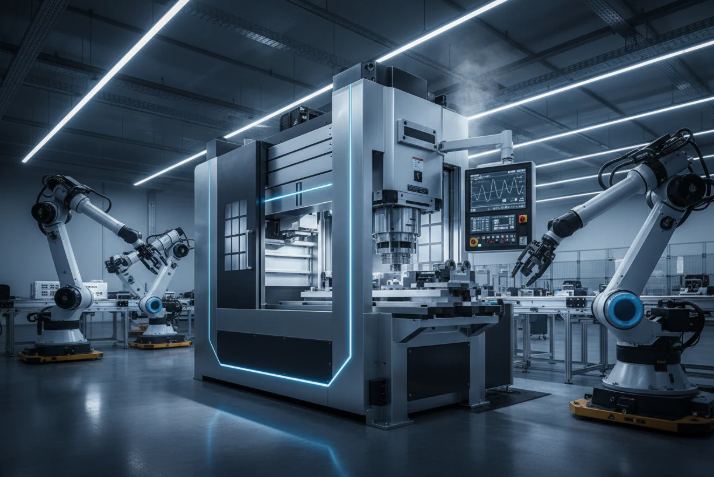
Every major industrial revolution has been driven by a breakthrough that changed how products were made. Steam power transformed manual production. Electricity accelerated manufacturing capacity. Computerization introduced precision and consistency. Today, automation and intelligent motion technology are shaping the next chapter of industrial progress.
Behind many of the world’s fastest production systems, most accurate manufacturing lines, and most advanced robotic platforms lies a technology that often receives little attention outside engineering circles: the linear motor. While many people focus on robots, artificial intelligence, and smart sensors, the motion system responsible for moving equipment with speed and accuracy is equally important.
As production environments become more sophisticated, selecting the right linear motors supplier has become a decision that extends beyond procurement. It influences manufacturing flexibility, engineering innovation, operational efficiency, and long-term competitiveness.
The companies leading modern automation understand that motion technology is not simply a machine component. It is a foundation that supports every stage of production performance.
Manufacturing Is Entering an Age of Instant Movement
Traditional industrial systems were built around mechanical transmission. Rotary motors transferred power through gears, shafts, chains, and lead screws to create movement. These systems served manufacturing well for decades, but they introduced limitations that are increasingly difficult to ignore.
Modern factories demand immediate response. Machines must stop precisely, accelerate rapidly, and repeat movements thousands of times without losing accuracy.
Linear motors achieve this by producing direct motion rather than converting rotational movement into linear travel. This approach eliminates multiple mechanical stages and creates a simpler path between energy and movement.
The result is faster response times, smoother operation, and greater positional accuracy.
See also: The Role of Technology in Public Transportation
Why Industrial Engineers Are Rethinking Motion Architecture
Many industrial facilities are no longer designing machines around traditional motion methods. Instead, engineers are beginning with performance objectives and building systems around the most efficient motion technology available.
This shift has encouraged greater adoption of direct-drive systems because they support cleaner machine designs and improved performance outcomes.
Modern engineering teams seek solutions capable of supporting evolving production requirements without introducing unnecessary complexity. Motion systems must be flexible enough to handle future upgrades while maintaining current operational standards.
A supplier capable of supporting this engineering philosophy becomes a valuable contributor throughout the development process.
The Link Between Motion Quality and Product Quality
Product quality is often associated with materials, assembly techniques, and inspection processes. However, motion quality also plays a major role.
Every movement within a production system influences the final product. Positioning errors, vibration, inconsistent acceleration, and mechanical wear can all affect manufacturing outcomes.
Linear motors help reduce these variables by providing highly controlled movement throughout the production cycle. Their precision supports tighter tolerances and greater repeatability.
In industries where microscopic deviations can create costly defects, motion quality directly affects profitability.
Why Production Flexibility Is Becoming Essential
Consumer expectations continue evolving at a rapid pace. Manufacturers are expected to introduce new products more frequently while maintaining efficiency and quality.
This environment requires production systems capable of adapting quickly to changing demands.
Linear motor technology supports flexibility by allowing manufacturers to adjust motion profiles, optimize performance parameters, and integrate new production processes with minimal disruption.
Facilities designed around adaptable motion systems are better prepared to respond to market changes and customer requirements.
The Growing Importance of Energy Efficiency
Energy consumption has become a significant consideration across global manufacturing sectors. Rising operational costs and sustainability goals have encouraged organizations to examine every aspect of their production infrastructure.
Motion systems contribute significantly to overall energy usage. Technologies that reduce mechanical losses can improve efficiency while lowering operating expenses.
Because linear motors eliminate many traditional transmission components, they often deliver energy more directly to the application. This efficient transfer of power can contribute to improved system performance and reduced waste.
For businesses pursuing sustainability objectives, efficient motion technology provides both environmental and economic advantages.
How Reliability Influences Manufacturing Confidence
Reliability affects every aspect of industrial operations. Equipment failures disrupt production schedules, increase maintenance costs, and create uncertainty throughout the supply chain.
Manufacturers increasingly value technologies that support stable, predictable operation over extended periods.
Direct-drive motion systems reduce dependence on wear-prone mechanical components, helping improve overall system reliability. Fewer mechanical interfaces often result in lower maintenance requirements and fewer unexpected interruptions.
Reliable equipment allows production teams to focus on optimization rather than troubleshooting.
The Human Side of Advanced Automation
Although automation is often discussed in terms of machines and technology, its impact extends to people as well.
Operators benefit from more stable systems. Engineers gain greater control over machine performance. Maintenance teams spend less time addressing mechanical failures. Managers experience improved production predictability.
The effectiveness of automation is ultimately measured by how well it supports the people responsible for operating and improving manufacturing systems.
Suppliers who understand these human factors can help organizations implement technology more successfully.
Why Technical Collaboration Matters
The most successful automation projects are rarely built through simple product transactions. They emerge from collaboration between manufacturers and technology specialists.
Each application presents unique requirements related to force, speed, travel distance, environmental conditions, and performance objectives.
A skilled supplier contributes insights that help organizations avoid costly mistakes while maximizing system capabilities. This collaborative relationship often leads to stronger engineering decisions and better project outcomes.
As manufacturing technology becomes increasingly complex, technical collaboration becomes even more valuable.
Supporting the Next Generation of Smart Production
The future of manufacturing involves interconnected systems capable of making intelligent decisions based on real-time information.
Motion technology plays a central role within these environments because movement remains essential to every production process. Whether transporting materials, positioning components, or coordinating robotic systems, motion must remain accurate, responsive, and reliable.
Linear motors align naturally with smart manufacturing objectives because they support high-performance automation while integrating effectively with modern control architectures.
Their role within future factories is expected to expand as production systems become more advanced.
Conclusion
Industrial innovation depends on technologies that remove limitations and create new possibilities. Linear motors have become one of the most important tools supporting this progress by delivering direct, precise, and efficient motion across a wide range of applications.
The value of a linear motors supplier extends far beyond providing equipment. The right supplier helps manufacturers navigate technological challenges, optimize system performance, and prepare for future growth.
As automation continues reshaping global industry, organizations that invest in strong technology partnerships will be better positioned to improve efficiency, accelerate innovation, and maintain long-term competitiveness.
In the rapidly evolving world of advanced manufacturing, motion is no longer just movement. It is a strategic advantage that helps determine who leads and who follows.