Global production systems are changing faster than ever before, and the core reason behind this transformation is the increasing demand for accuracy, stability, and intelligent manufacturing processes. Industries are no longer satisfied with conventional fabrication methods that rely heavily on manual control and inconsistent thermal welding techniques. Instead, they are moving toward highly refined technologies capable of producing flawless results with minimal variation.
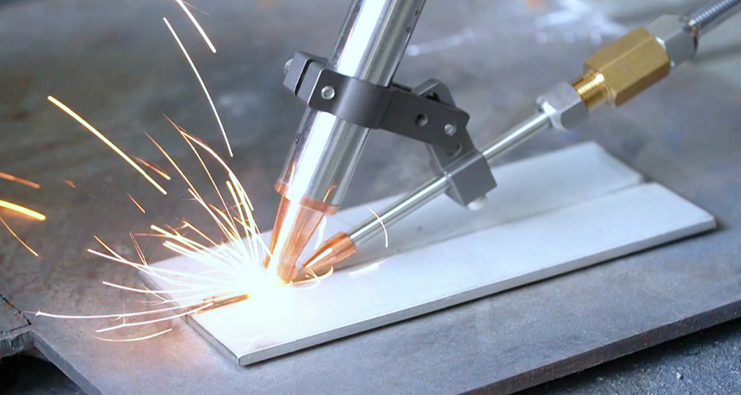
Laser welding has become one of the most influential technologies driving this shift. It operates through concentrated optical energy that fuses materials in a highly controlled manner, allowing manufacturers to achieve strong joints without excessive heat damage or structural distortion. This method has redefined expectations in sectors where precision directly affects performance and safety.
Within this technological evolution, the role of a laser welding machine manufacturer becomes fundamentally important. These manufacturers are responsible for developing advanced engineering systems that not only perform welding functions but also integrate optical design, thermal regulation, motion control, and automation compatibility into a single industrial solution.
The effectiveness of modern production lines often depends on how well these systems are designed at the source level.
Industrial Transition Toward High-Accuracy Fabrication
Manufacturing has gradually moved away from broad tolerance production toward extremely narrow precision standards. Products today are smaller, more complex, and far more sensitive to structural inconsistencies than in previous decades.
Traditional welding techniques struggle to meet these modern expectations because they often introduce uneven heat distribution and mechanical stress within materials. These limitations can compromise product strength and reduce overall production consistency.
Laser-based welding systems resolve these challenges by offering focused energy application, allowing materials to bond cleanly while maintaining structural integrity. This shift has made laser technology an essential part of advanced industrial environments.
See also: The Role of Technology in Public Transportation
Engineering Depth Behind Laser Welding System Development
A modern welding machine based on laser technology is not a simple mechanical device. It represents a highly coordinated engineering ecosystem where optics, electronics, heat control systems, and precision mechanics must function in perfect synchronization.
A laser welding machine manufacturer must therefore possess multidisciplinary engineering capability. This includes knowledge of photon behavior, thermal diffusion control, material interaction response, and automated system integration.
Each system must be carefully designed to maintain beam consistency, energy stability, and operational safety during continuous industrial usage. Even small variations in design quality can significantly influence welding output and long-term machine performance.
This makes manufacturing expertise a critical factor in industrial reliability.
Why Precision Has Become a Competitive Requirement
In modern production environments, precision is no longer an optional enhancement. It is a fundamental requirement for maintaining competitiveness in global markets.
Industries such as electronics, automotive engineering, aerospace fabrication, and medical device manufacturing demand extremely tight tolerances. Even microscopic deviations in weld quality can lead to product failure or functional inefficiency.
Laser welding technology offers a level of control that supports these requirements by delivering consistent energy concentration and controlled penetration depth. This allows manufacturers to achieve uniform results across large production batches.
As product complexity increases, precision becomes even more essential for maintaining industrial relevance.
Efficiency Gains Through Advanced Welding Technology
One of the most significant advantages of laser welding systems is their ability to streamline production workflows. Conventional welding processes often require multiple post-processing stages to correct imperfections or refine joint quality.
Laser systems reduce the need for these additional steps by producing cleaner results directly during the welding process. This improvement significantly reduces production time and operational cost.
Furthermore, laser-based systems operate with high-speed capability while maintaining accuracy, making them suitable for industries focused on mass production without quality compromise.
The combination of speed and precision creates a strong foundation for modern industrial efficiency.
Integration With Automated Manufacturing Systems
The evolution of manufacturing is strongly linked with automation technologies. Modern factories increasingly rely on robotic systems, programmable machinery, and digitally controlled production environments.
Laser welding technology aligns naturally with this transformation. It can be integrated into robotic arms, CNC platforms, and fully automated production lines without requiring major structural adjustments.
A forward-thinking laser welding machine manufacturer ensures that systems are designed with digital compatibility, enabling seamless communication between machines and control software.
This integration supports real-time monitoring, adaptive control, and intelligent production optimization, all of which are essential features of Industry 4.0 environments.
Versatility Across Multiple Industrial Sectors
Laser welding technology is not limited to a single industry. Its adaptability allows it to be used across a wide range of manufacturing sectors, each with unique material and precision requirements.
It is widely used in automotive assembly, electronic circuit fabrication, aerospace structural work, energy storage systems, and high-precision tooling production.
Different applications require different energy configurations, beam adjustments, and motion calibration settings. This requires systems that are highly customizable and adaptable to varying industrial conditions.
Manufacturers must design equipment capable of meeting these diverse operational demands.
Operational Stability and Long-Term Durability
Industrial environments require equipment that can operate continuously under high workload conditions without performance degradation.
Laser welding systems are engineered with advanced thermal regulation, stable optical components, and reinforced mechanical structures to ensure long-term operational stability.
Reduced mechanical wear and fewer moving parts contribute to lower maintenance requirements and higher system uptime.
A reliable laser welding machine manufacturer prioritizes durability and consistent performance, ensuring that systems maintain output quality even after extended usage periods.
Evolution Toward Intelligent Welding Systems
The future of laser welding is closely connected with advancements in artificial intelligence, data-driven manufacturing, and predictive system monitoring.
Emerging systems are expected to include self-adjusting parameters, real-time quality detection, and adaptive energy control mechanisms that respond dynamically to material conditions.
These innovations will enhance production accuracy while reducing the need for manual intervention.
Manufacturers that focus on innovation and technological evolution will play a major role in shaping the next generation of industrial fabrication systems.
Conclusion
Laser welding technology has established itself as a key component of modern industrial development due to its unmatched precision, efficiency, and adaptability. It enables manufacturers to achieve production results that were previously impossible with traditional welding methods.
However, the real value of this technology depends heavily on the engineering capability behind it.
A laser welding machine manufacturer serves as more than an equipment provider. It acts as an engineering foundation that determines how effectively industrial systems perform in real-world environments.
As global manufacturing continues moving toward automation, digital integration, and ultra-precise fabrication standards, the importance of advanced laser welding systems and their manufacturers will continue to grow as a defining factor in industrial progress.