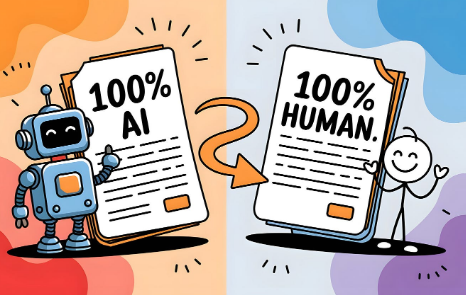
We have all been there. You use an AI writing tool to draft something, read it back, and think “this is technically fine but it sounds nothing like me.” The information is accurate, the structure makes sense, but something about it feels hollow and weirdly robotic. That feeling is not just in your head. Readers notice it too, often without being able to pinpoint exactly why the content feels off.
This is the exact problem that AI text humanization tools were built to solve, and honestly they are becoming one of the most practical resources available to anyone who creates content regularly. Tools for deep fake detection are becoming similarly essential in media verification, especially as AI’s role in media creation continues to grow.
Why AI Writing Sounds the Way It Does
AI writing tools generate content by recognizing patterns in massive amounts of existing text. They predict which words and sentences are most likely to follow each other based on everything they have been trained on. The output is technically correct almost every time, but it lacks the one thing that makes writing genuinely engaging: a real human behind it.
You can usually spot AI generated content pretty quickly. The sentences tend to follow the same rhythm throughout. Certain words show up constantly, things like “furthermore,” “it is worth noting,” and “in conclusion.” Every paragraph is roughly the same length. The tone never really shifts. There are no genuine opinions, no personal stories, no moments where the writer sounds like they actually care about what they are saying.
Beyond just feeling flat to readers, AI content is increasingly flagged by detection tools used by schools, employers, and search platforms. Publishing raw AI output without any refinement is becoming a real risk for anyone who depends on their content performing well.
What Humanization Tools Actually Do
Text humanization tools go much deeper than simply swapping out a few words. They analyze the underlying patterns that make AI writing feel machine generated and restructure the content to reflect how actual people communicate.
Sentence variety is one of the biggest improvements these tools make. Real writers naturally mix short direct sentences with longer, more detailed ones. AI tends to keep everything at the same length and structure, which creates a monotonous reading experience. Humanization tools break that pattern and introduce the kind of natural rhythm that keeps readers moving through your content.
Vocabulary choices get refreshed as well. AI models lean heavily on certain formal words and phrases because those patterns appear frequently in their training data. A quality text humanizer replaces those repetitive choices with more natural language that actually fits the context and sounds like something a person would genuinely say.
Tone adjustment is another major benefit. Different content needs different energy. A product description needs to feel exciting and direct. A blog post can be more conversational. A professional report needs a measured authoritative voice. Humanization tools can shift content to match whatever tone the situation actually calls for, rather than leaving everything stuck in the same generic AI register.
The overall flow improves too. Mechanical transition phrases get replaced with connections that feel organic. Ideas link together in ways that feel thought through rather than assembled by an algorithm completing a task.
Who Gets the Most Out of These Tools
Content writers and bloggers who use AI to speed up their drafting process get to keep all the efficiency benefits while adding back the authentic voice their audience came for. The result is content that ranks better, builds more trust, and actually sounds like the person behind the brand.
Marketers need their copy to connect with real people and motivate real action. Cold robotic language actively kills conversions regardless of how good the offer is. Humanized content brings back the emotional tone and genuine personality that makes marketing actually work.
Students who use AI tools for research and drafting assistance face a real challenge when raw AI output sounds identical to what everyone else submits. Humanization helps reshape drafted content into something that reflects their own voice and understanding, which is what their work should demonstrate anyway.
Small business owners dealing with endless content needs across websites, emails, and social media get a practical way to produce professional sounding communication without hiring a full content team. Humanized AI content sounds personal because the process makes it that way.
The Bottom Line
Using AI to help create content is completely reasonable at this point. Almost everyone does it in some form. The mistake is publishing raw AI output and hoping nobody notices, because increasingly they do.
Humanization tools close that gap. They take content that is structurally sound but emotionally flat and reshape it into something that actually reads like a person wrote it with a specific audience in mind.
The writers and creators getting the best results right now are not avoiding AI and they are not blindly publishing whatever it generates. They are using both AI and humanization tools together, and the difference in their content quality shows.